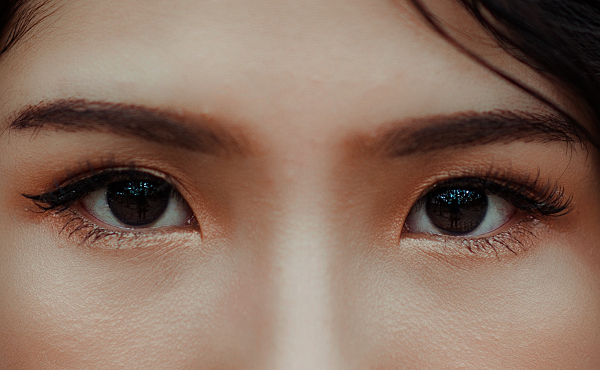
When you read a person's emotion, do place more value on the expression of their eyes or of their mouth? In Japan, people tend to value the eyes for emotional cues, whereas Americans tend to value the mouth.This has some surprising side effects.
How familiar are you with the Kanji for emotions?
When you read a person's emotion, do you place more value on the expression of their eyes or their mouth?
In Japan, people tend to value the eyes for emotional cues, whereas Americans tend to value the mouth, says researcher Masaki Yuki, a behavioral scientist at Hokkaido University in Japan.
Yuki theorizes that this is because the Japanese, when in the presence of others, try to suppress their emotions, considering them private, whereas most Americans flaunt their emotions, considering them public.
The eyes, he notes, are more difficult to control than the mouth. Thus, it is more challenging to hide expressive eyes. Because Japanese culture tends to emphasize conformity, humbleness, and emotional suppression, people may even avoid eye contact altogether rather than risk revealing emotion.
Americans, however, are often open about sharing positive emotions. They consider hiding emotions to be inauthentic or “two-faced.” The result is pressure to “turn that frown upside down.”
Yuki first noticed a difference in facial expressions when looking at photos of American celebrities. “Their smiles looked strange to me,” he explained. “They opened their mouths too widely and raised the corners in an exaggerated way.”
A Correlation with Emoticons
When Yuki began communicating with American scholars by email, he was confused by their use of emoticons such as :) and :(.
“It took some time before I finally understood that they were faces,” he wrote. In Japan, emoticons tend to emphasize the eyes, such as (^_^) for happiness and (;_;) for sadness.
“After seeing the difference between American and Japanese emoticons, it dawned on me that the faces looked exactly like typical American and Japanese smiles.”
Differences in Animation
This difference also appears in animation. American comics tend to feature smaller eyes and larger mouths. Japanese anime, by contrast, often depicts characters with large expressive eyes and minimal mouths.
Do You Really Want to Know?
We may think it would be helpful to read another person’s mind, but Yuki cautions against it. “Would you really want to know if your friend’s, lover’s, or boss’s smile was not genuine? In some contexts, especially in the United States, maybe it is better not to know.”